When booking interpreting services, many people are unaware that there is more than one interpreting method, or that the choice between them can significantly impact how communication flows. Understanding the difference between simultaneous interpreting and consecutive interpreting is essential when planning meetings, appointments, or events that require effective and accessible communication.
At Silent Sounds Communications, we provide professional spoken-language interpreting and British Sign Language (BSL) interpreting, supporting clients across a wide range of settings to ensure the right approach is used every time.
What is simultaneous interpreting?
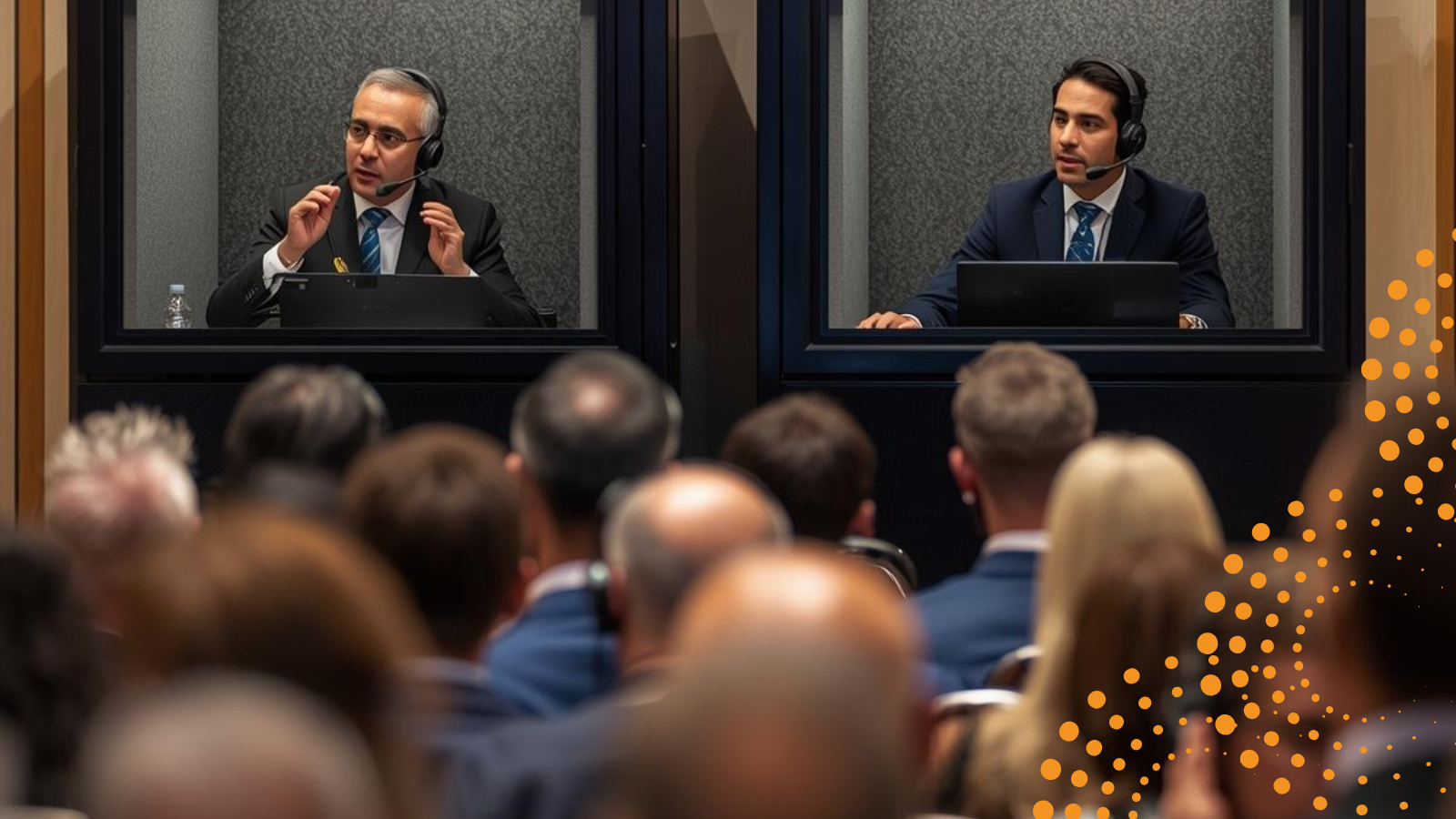
Simultaneous interpreting is a highly skilled form of interpreting delivered in real time. The interpreter listens to the speaker and conveys the message into the target language almost instantly, usually with only a brief delay of a few seconds.
In spoken-language interpreting, this method is often supported by specialist equipment such as headsets, microphones, and, for larger events, soundproof booths. This allows the interpretation to be heard clearly without interrupting the speaker. In BSL interpreting, simultaneous interpreting involves the interpreter signing at the same time as the speaker is talking, ensuring Deaf participants receive information at the same pace as hearing participants.
Ideal settings for simultaneous interpreting:
• Conferences and large-scale meetings
• Multilingual events with multiple languages
• Presentations, seminars, and panel discussions
• Situations where uninterrupted communication is essential
Simultaneous interpreting is often what people imagine when they think of interpreting for the first time. However, it is a specialist service and is not typically used in everyday or community-based appointments.
What is consecutive interpreting?
Consecutive interpreting is the most commonly used method in community and professional settings. In this approach, the speaker talks for a short segment—such as a sentence or a complete idea—then pauses while the interpreter delivers the message into the target language.
The interpreter may take notes to ensure accuracy, capturing not just the words spoken but also the meaning, tone, and intent. This method is widely used in both spoken-language interpreting and BSL interpreting, particularly where clarity and detail are vital.
Ideal settings for consecutive interpreting:
• Medical and healthcare appointments
• Legal, police, and immigration matters
• Business meetings and negotiations
• Social services, education, and workplace discussions
Consecutive interpreting takes longer than simultaneous interpreting, as each message is communicated in turn, but it allows for greater interaction, clarification, and understanding.
Key differences between simultaneous and consecutive Interpreting
Timing and flow
• Simultaneous interpreting delivers information in real time, maintaining the natural pace of the speaker.
• Consecutive interpreting involves pauses, allowing for a more measured and detailed exchange but increasing the overall length of the session.
Equipment and setup
• Simultaneous interpreting often requires specialist equipment, such as headsets or booths, for spoken languages.
• Consecutive interpreting generally requires little to no equipment, aside from notetaking tools.
Interaction and engagement
• Simultaneous interpreting prioritises efficiency and uninterrupted delivery, with limited interaction during the speech.
• Consecutive interpreting allows for questions, clarification, and discussion, making it well suited to appointments and interactive meetings.
Skill and concentration
• Simultaneous interpreting demands intense concentration and rapid processing; interpreters may work in pairs for longer sessions.
• Consecutive interpreting requires excellent listening, memory, and note-taking skills to accurately convey meaning after a delay.
Choosing the right interpreting method
The choice between consecutive and simultaneous interpreting depends on several factors, including:
• The nature and length of the event
• The number of participants
• The complexity of the information being shared
• Whether spoken-language interpreting, BSL interpreting, or both are required
At Silent Sounds Communications, we take a practical, client-focused approach, offering guidance to ensure the most appropriate interpreting and communication support services are provided. Our services include face-to-face interpreting, telephone interpreting, and remote video interpreting solutions.
Interpreting services with Silent Sounds
Understanding how different interpreting methods work helps ensure communication is inclusive, accurate, and effective for everyone involved.
Silent Sounds’ delivers professional spoken-language and British Sign Language interpreting across diverse sectors, supporting individuals and organisations to communicate with confidence and clarity.
If you’re unsure which interpreting method is right for your setting, our team is happy to advise. Contact us today! info@silent-sounds.co.uk
Related articles:
Understanding on-demand interpreting services
The value of skilled interpreters
Understanding on-demand interpreting services