Resetting the cultural awareness button: Building safer, stronger communication through curiosity
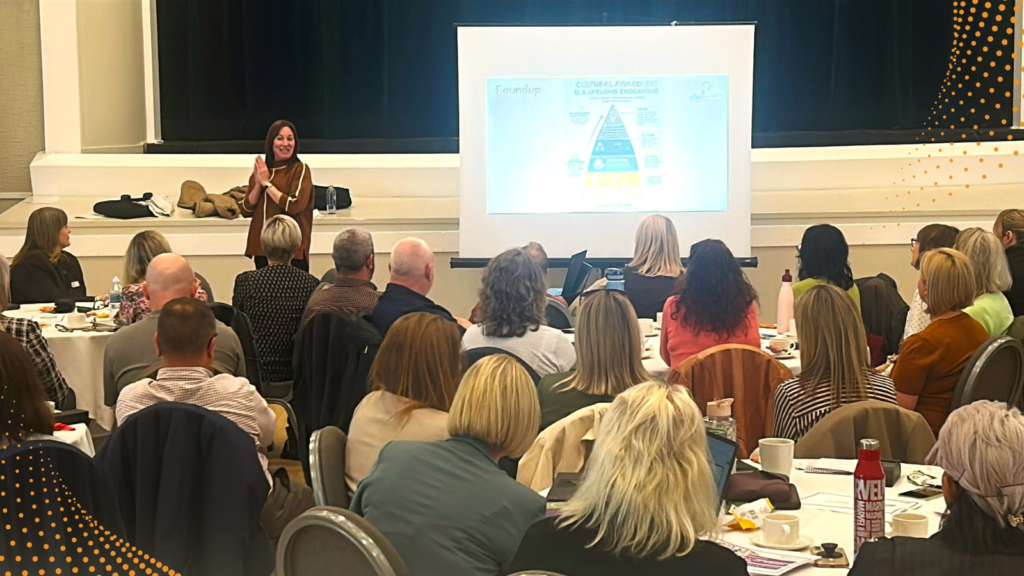
In a world where communication is increasingly diverse, fast-paced, and multicultural, understanding one another requires more than simply hearing words. It requires curiosity, sensitivity, patience, and the confidence to ask meaningful questions. Recently, we had the privilege of delivering our Cultural Awareness sessions face-to-face in York with the team at Joseph Rowntree Housing Trust, engaging an audience of 60 people, before returning a couple of days after virtually to deliver the session again to another large audience. Both sessions were incredibly well received and reinforced something we believe passionately: Cultural understanding is not a destination; it is a mindset.
Our message throughout the sessions was simple but powerful: Reset your cultural awareness button.
Too often, we assume we understand others because we hear the same language, recognise familiar behaviours, or work within shared systems. Yet culture is layered, subtle, and often invisible. Real cultural awareness comes from stepping beyond assumptions and embracing a curious mind just as we encourage our children to do so. Being willing to learn, ask questions, and appreciate the experiences, values, and communication styles of others.
At the heart of our sessions was experiential learning: Encouraging people to “get out there” and experience difference rather than fear it. We challenged attendees to lean into curiosity, to ask the right questions respectfully, and to see every interaction as an opportunity to better understand another person’s perspective.
This matters deeply because communication is never just verbal. Language lives in pauses, facial expressions, gestures, body positioning, silence, confidence, hesitation, tone, and context. Some of the most important information in a conversation is invisible.
When teams understand these hidden signals, they are better equipped for working with professional interpreters, ensuring communication becomes not only more accurate, but also safer and more inclusive.
For organisations supporting diverse communities, this understanding is essential. Miscommunication can happen not because people are unwilling to connect, but because meaning becomes lost in assumptions. An interpreter may accurately translate spoken words, yet without cultural understanding, subtle intent, emotion, hesitation, or discomfort may still be overlooked.
That is why working with professional interpreters effectively means understanding the whole communication environment, not simply expecting interpreting to do all the work.
One concept we explored during the sessions was the Japanese idea of Ma (間), a cultural principle centred on intentional pause and meaningful space. In many Western conversations, silence is often uncomfortable and rushed to be filled. Yet Ma reminds us that pauses can be productive, respectful, and deeply human.
In interpreted conversations especially, intentional pauses are crucial.
A pause gives a speaker time to reflect and answer explicitly. It gives an interpreter space to check understanding and ensure accuracy. It gives everyone permission to think rather than react.
Most importantly, it creates psychological safety.
When people feel they have the time and space to express themselves clearly, communication becomes richer and more authentic. Rather than feeling pressured, individuals are empowered to contribute thoughtfully and confidently.
This intentional slowing down links closely to ideas of human development and growth, including the principles behind Maslow’s hierarchy of needs. Before individuals can fully engage, learn, and contribute meaningfully, they need to feel safe, respected, and understood. In culturally sensitive environments, communication itself becomes part of creating that safety.
Only then can people begin moving toward self-confidence, belonging, trust, and ultimately self-actualisation which is the ability to thrive as their authentic selves.
This is why cultural awareness is so much more than training.
It is about creating environments where people feel psychologically safe enough to ask questions, confident enough to admit what they do not know, and curious enough to learn from difference.
During both our in-person York session and our virtual follow-up, one theme resonated repeatedly with participants: The importance of replacing certainty with curiosity.
We do not become culturally aware by memorising facts about different groups or communities. We become culturally aware by learning how to listen better, notice more, pause intentionally, and ask better questions.
- What assumptions am I making?
- What might I not yet understand?
- What invisible cues am I missing?
- How can I create space for someone to explain their perspective safely?
These are the questions that strengthen teams and improve communication outcomes.
The sessions also highlighted how effective working with professional interpreters depends on partnership. Interpreters are not simply linguistic tools, they are communication professionals supporting clarity, accuracy, understanding, and safety. When teams understand high-context versus low-context communication, invisible cultural cues and create intentional space within conversations, interpreters can work more effectively to achieve truly accurate communication.
Our time in York reminded us why this work matters.The enthusiasm, engagement, and openness shown across both sessions demonstrated that people genuinely want to learn, grow, and communicate better. The appetite for understanding was clear.
If there is one message we hope attendees carried forward, it is this:
Reset your cultural awareness button. Stay curious. Ask thoughtful questions. Create space. Listen deeply. Appreciate difference. Because cultural understanding begins not with certainty, but with curiosity, compassion, and the courage to learn.
Would your organisation benefit from a session on cultural awareness diving into cultural frameworks that add context and deeper understanding?
Contact our friendly team today! info@silent-sounds.co.uk
Articles of interest:
The value of skilled interpreters
Master close and wide listening to improve interpreter skills
Ahead of the curve delivering seamless interpreting and trandlation services throughout the UK